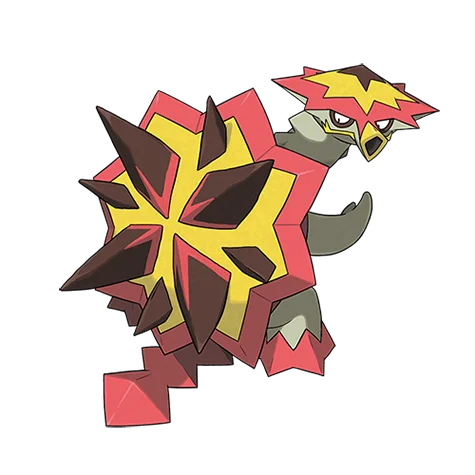
Turtonator Evolution
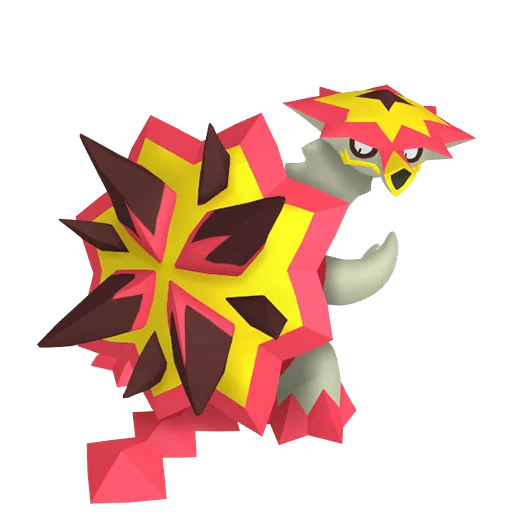
Turtonator's Detailed Stats
| Stat | Base | EVs | IVs | Total | |
|---|---|---|---|---|---|
| HP | 60 | 261 | |||
| Attack | 78 | 192 | |||
| Defense | 135 | 306 | |||
| Sp. Atk | 91 | 218 | |||
| Sp. Def | 85 | 206 | |||
| Speed | 36 | 108 | |||
| 1291 | |||||
Turtonator Abilities
Protects against critical hits.
Turtonator Moves
| Move▲ | Type▲ | Cat.▲ | Pow▲ | Acc▲ | Method▲ | Description |
|---|
Turtonator Sprites
The shell on its back is chemically unstable and explodes violently if struck. The hole in its stomach is its weak point.
It gushes fire and poisonous gases from its nostrils. Its dung is an explosive substance and can be put to various uses.
It lives in volcanoes and eats sulfur and other minerals. Materials from the food it eats form the basis of its explosive shell.
Its exploding shell poses a real danger but is sensitive to moisture. On rainy days, Turtonator takes silent refuge in caves.
Explosive substances coat the shell on its back. Enemies that dare attack it will be blown away by an immense detonation.
Turtonator's Japanese name is Bakugames (バクガメス). Here are all the official names for Turtonator across different languages:
Turtonator Breeding
How to Get Turtonator
Turtonator can be encountered in the wild across multiple Pokemon games. Here is how to obtain Turtonator in every game where it is available:
About Turtonator
Turtonator is a Fire/Dragon-type Pokemon introduced in Generation 7. With a Base Stat Total (BST) of 485, Turtonator is classified as a Blast Turtle Pokémon and is part of the Turtonator evolution line.
In competitive play, Turtonator is placed in the NatDex Monotype tier where it holds a 0.02% usage rate. Its key abilities are Shell Armor, which allow it to function as a versatile team member. Turtonator is weak to Ground, Rock, Dragon-type moves, so trainers should plan around these vulnerabilities.
Turtonator can learn 80 moves across Level-up, TM, Tutor, and Egg methods. Its most popular competitive moves include Rapid Spin, Fire Blast, Draco Meteor, Body Press. Standing at 2m tall and weighing 212kg, Turtonator has been a fan favorite since its debut in the Alola region games.